
How to Remove Yellowing from Vintage Wedding Gowns (And When to Call a Pro)
You open the box expecting to find something beautiful. Instead, you’re looking at a gown that’s gone from ivory white to a dull, dingy yellow. Maybe it’s your mother’s dress. Maybe it’s your own — packed away after the wedding with the best of intentions and forgotten in a closet for twenty years.
Whatever the story, here’s the truth: yellowing in vintage wedding gowns is incredibly common. It doesn’t mean the gown is ruined. And in many cases, it can be fixed — but how you handle it from this moment forward matters more than anything else.
This guide will walk you through why gowns yellow, what to avoid, what you can try at home (and when you absolutely shouldn’t), and when it’s time to hand the gown to a professional who knows what they’re doing.
Why Do Vintage Wedding Gowns Turn Yellow?
Yellowing happens for a few different reasons, and knowing which one you’re dealing with helps determine the right fix.
Oxidation of natural fibers is the most common cause. Silk, cotton, and other protein-based fabrics naturally oxidize when exposed to air over time. The color shifts from bright white or ivory toward a warm yellow or brown. It’s the same process that turns old paper yellow — and just like paper, the longer it sits, the deeper the discoloration goes.
Improper storage accelerates the process. Storing a gown in a plastic bag or cardboard box is one of the worst things you can do. Plastic traps moisture and releases gases that attack fabric. Cardboard is acidic and transfers that acidity directly to the fabric it touches. Both create the perfect environment for yellowing.
Hidden stains are sneaky and often the biggest culprit. Champagne. Cake. Perspiration. Body oils. These don’t always show up right after the wedding — they’re nearly invisible at first. But over the years, the sugars and proteins in those stains oxidize and caramelize into brown or yellow patches. Many people discover their gown has visible stains for the first time when they pull it out of storage years later.
Gowns from the 1950s through the 1990s are especially prone to this because of the fabrics most commonly used: silk organza, silk satin, and structured tulle. Beautiful fabrics — but sensitive ones.
What NOT to Do Before You Try Anything
Before you reach for the bleach or start filling a tub, stop. The wrong treatment can permanently damage a vintage gown — and some DIY fixes that sound reasonable are actually guaranteed to make things worse.
Never use chlorine bleach. Bleach destroys protein-based fibers like silk and wool at a chemical level. It doesn’t just remove the yellow — it breaks down the fabric itself, causing it to thin, fray, or fall apart. Even a diluted bleach solution can cause irreversible damage to a silk gown.
Avoid hydrogen peroxide unless you know exactly what you’re working with. On some synthetic fabrics, it can help. On silk and delicate embellishments, it can cause uneven whitening, bleach-out patches, and permanent discoloration that’s actually worse than the original yellow.
Don’t try sun bleaching. Yes, sunlight can naturally lighten some fabrics. It also weakens delicate fibers over time, causes uneven fading, and can literally rot silk if the exposure is prolonged.
Skip the hot-water soak. Hot water shrinks, warps, and distorts structured gowns. Many vintage dresses have internal boning, built-in structure, and hand-stitched details that will not survive immersion in warm or hot water.
One more thing: check for beading, lace apliqués, or embellishments. Many vintage gowns use adhesives underneath their decorative elements. Soaking the gown — even in cold water — can dissolve those adhesives, causing beads and lace panels to detach or slide out of place. A gown that could have been fully restored can become permanently damaged very quickly.
At-Home Options: What Might Work on Minor Yellowing
Here’s the honest version: at-home treatments have a very limited range of situations where they’re appropriate. If your gown is silk, satin, organza, or heavily embellished, skip this section and consider specialty garment care from a professional instead.
But if you have a polyester or synthetic blend gown with light, surface-level yellowing, a few gentle options are worth trying:
Oxygen-based cleaners (like OxiClean) — not chlorine bleach — can reduce mild yellowing on synthetic fabrics. Use cold water, follow the product directions, and always test on a hidden seam or interior fabric panel before treating visible areas.
White distilled vinegar can neutralize mild oxidation on synthetic fabrics. Add a cup to a cold-water soak for 30 minutes, then rinse thoroughly. This works best on very light yellowing and won’t do much for deep-set staining.
The most important rule: if the care label says “Dry Clean Only” — stop right there. Wet treatments on dry-clean-only fabrics almost always make yellowing worse. And once you’ve wet-treated a dry-clean-only fabric, professional restoration becomes significantly harder or impossible. You’re not just risking the stain — you’re risking the whole gown.
When You Need a Professional Wedding Dress Cleaner
Some situations aren’t DIY territory, no matter how careful you are. Here’s how to know when it’s time to bring in a professional:
- The gown is made of silk, satin, chiffon, or organza
- There is lace, beading, sequins, or decorative embellishments
- The yellowing is deep-set, widespread, or accompanied by brown staining
- The gown has high sentimental or monetary value
- You want to preserve it for a daughter, granddaughter, or future use
- The care label says “Dry Clean Only”
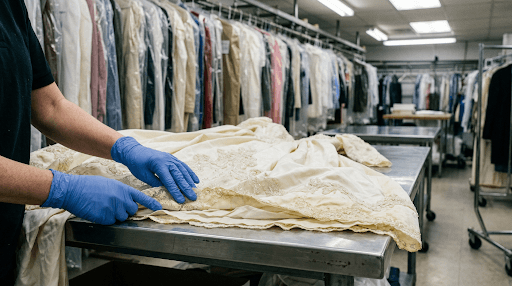
Professional wedding dress cleaners use solvents specifically formulated for bridal fabrics — not the same process as your standard drop-off. Specialized dry cleaning for bridal fabrics starts with a detailed inspection of the fabric type, construction, and staining. Then, targeted pre-treatment is applied to stained areas before the full cleaning process begins. Finishing and pressing is done by hand by trained staff who understand how delicate these gowns are.
Is your vintage gown yellowed and too precious to risk a DIY fix?Starcrest Cleaners specializes in wedding dress cleaning and preservation — using advanced cleaning processes that restore color vibrancy while protecting the integrity of delicate fabrics. Our professionally trained staff handles each gown with individual care and attention. |
What Does Professional Wedding Gown Restoration Look Like?
If you’ve never had a gown professionally cleaned, you might picture a standard dry-cleaning drop-off. It’s not that. Here’s what a quality professional process actually involves:
Inspection first. A trained specialist examines the fabric type, construction method, embellishments, and staining patterns before any cleaning begins. This step determines what solvents and processes are appropriate.
Pre-treatment of stained areas. Those hidden sugar and body-oil stains get targeted pre-treatment before the full cleaning — this is the most important step for reversing yellowing from organic staining.
Solvent-based cleaning tailored to the fabric. Not a one-size-fits-all process. Different fabrics respond to different solvents. A professional cleaner selects the right approach for your gown’s specific construction.
Hand finishing and pressing. Delicate fabrics require hand finishing, not commercial pressing machines. This preserves the shape, volume, and detailing of the gown.
Optional preservation packaging. After cleaning, proper preservation extends the gown’s life. At Starcrest Cleaners, preservation services guard against future yellowing, discoloration, and fabric deterioration — so the gown stays beautiful for generations to come.
How to Store Your Wedding Gown After Cleaning to Prevent Future Yellowing
Once your gown is clean, the way you store it determines how long it stays that way. A few non-negotiables:
Use acid-free tissue paper to stuff the bodice and wrap the gown. Regular tissue paper is acidic and will contribute to yellowing over time. Acid-free is a must.
Store in an archival-quality box — not a plastic garment bag, not cardboard. An acid-free preservation box protects the fabric from light, moisture, and airborne contaminants.
Never hang a gown long-term. Gravity pulls on the weight of the fabric, causing the bodice and straps to stretch and distort. Always store folded with tissue support.
Choose a climate-stable location. Attics and basements are the worst choices — both experience dramatic temperature and humidity swings. A cool, dark closet in a climate-controlled area of the home is ideal.
Check the gown every few years. Even well-preserved gowns benefit from a periodic inspection. If you notice any emerging discoloration, addressing it early is always easier than letting it deepen.
The simplest solution? Professional preservation. When Starcrest Cleaners handles your gown, they prepare it for long-term storage correctly — so you don’t have to worry about it.
Frequently Asked Questions
Can yellowing be completely reversed in a vintage wedding gown?
It depends on the severity and the fabric. Light yellowing on synthetic fabrics often responds well to professional treatment. Deep-set yellowing in silk or satin can be significantly improved, but it may not return to pure white in every case. The best approach is an honest assessment from a professional before any treatment begins — they can tell you what’s realistic for your specific gown.
How long can I wait to have a vintage gown cleaned?
The sooner, the better. Yellowing and organic staining worsen as they oxidize deeper into the fabric over time. A gown treated early — either right after the wedding or as soon as you discover the problem — has a much better chance of full restoration than one left for decades.
Does dry cleaning remove yellowing from wedding gowns?
Specialized bridal dry cleaning can significantly reduce or eliminate yellowing, depending on the cause and fabric. But it’s not the same as standard dry cleaning. It requires trained specialists and appropriate solvents — not every cleaner offers this level of service.
How much does it cost to have a vintage wedding gown restored?
Pricing varies based on the gown’s condition, fabric type, and the extent of treatment needed. Contact Starcrest Cleaners directly for an honest assessment and quote. They offer wedding dress cleaning and preservation services across Illinois, Indiana, Missouri, and Nebraska.
Will my gown be safe at a professional cleaner?
At a reputable specialist, yes. Look for a cleaner with a dedicated wedding dress service, professionally trained staff, and preservation options — not a generic drop-off location. Starcrest Cleaners checks all three boxes.
Your Gown Deserves Better Than a Gamble
Your vintage wedding gown holds something irreplaceable — memory, history, and meaning that no dollar amount can replace. Before you try anything at home, think about what you’re risking. And if there’s any doubt, trust the people trained to handle it.
Starcrest Cleaners has the expertise, equipment, and genuine care to restore your vintage wedding gown and preserve it for generations. Serving families across the communities we serve in Illinois, Indiana, Missouri, and Nebraska.
Your gown holds a lifetime of memories. Don’t risk it on a DIY fix.Starcrest Cleaners has the expertise, equipment, and genuine care to restore your vintage wedding gown and preserve it for generations. |