
The Ultimate Guide to Cleaning and Storing Leather Jackets for the Winter Off-Season
Your leather jacket is more than just a piece of clothing. It is an investment, a second skin, and likely the coolest item in your wardrobe. But after months of facing freezing rain, road salt, and dry indoor heating, that jacket is tired.
If you simply toss it onto a wire hanger and shove it into the back of a dark closet until next October, you are asking for trouble. Leather is an organic material. It needs to breathe, it needs moisture, and it definitely needs a break from the chemicals used to melt ice on the sidewalk. Without the right care, that expensive hide will stiffen, crack, or even grow mold during the humid summer months.
At Starcrest Cleaners, we believe that proper seasonal maintenance is the key to making your favorite pieces last a lifetime.
Why Leather Requires Specific Post-Winter Care
Winter is a brutal season for leather. Think about what happens to your own skin when the temperature drops. It gets dry, flaky, and irritated. Leather—which is animal skin—goes through the exact same thing, but it can’t produce its own oils to bounce back.
The Hidden Threat of Road Salt
The biggest villain in this story is road salt. When you walk through slush, salt clings to the bottom and sleeves of your jacket. As the moisture evaporates, the salt stays behind, pulling every bit of natural moisture out of the leather fibers. This leaves the material brittle. If you don’t neutralize that salt before storage, it will continue to eat away at the finish all summer long.
The Problem with pH Balance
Leather is naturally slightly acidic. Most household cleaners, like dish soap or all-purpose sprays, are alkaline. When you use the wrong cleaner, you destroy the pH balance of the material. This causes a chemical reaction that can make the leather peel or change color permanently.
Step 1: Evaluating and Cleaning Your Jacket Before Storage
Before you even think about storage, you need to look at the “battle scars” your jacket picked up over the winter.
Do a Surface Dusting
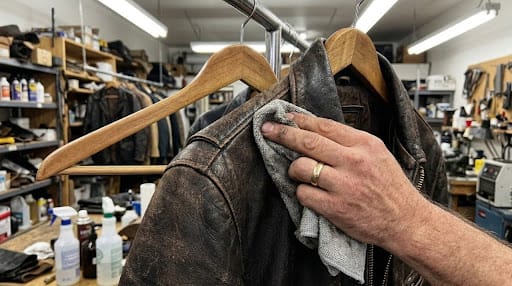
Start by taking a soft, dry microfiber cloth and wiping down the entire jacket. You want to get rid of the loose dust and hair that settled on the shoulders. This prevents those particles from getting ground into the grain while the jacket sits in your closet.
Spot Cleaning the Right Way
If you see a small water spot or some light dirt, you can use a very slightly damp cloth. Avoid all-purpose wipes. Most of those “handy” wipes contain alcohol or bleach. Alcohol is a solvent that strips away the protective topcoat of your leather and dehydrates it instantly.
- For light soil: Use a dedicated leather cleaner specifically formulated for high-quality hides.
- For salt stains: This is where things get tricky. Salt doesn’t just sit on the surface; it gets deep into the pores. If you see white, crusty lines that won’t come off with a light wipe, stop. Scrubbing harder will only scratch the leather.
Don’t Forget the Lining
The inside of your jacket traps sweat and body oils. These can turn rancid or cause odors if left alone in a warm closet. While you can’t throw a leather jacket in the washing machine, a professional dry cleaning service ensures the lining is sanitized and deodorized without risking the integrity of the leather exterior.
Step 2: Conditioning—The Secret to Longevity
Once the jacket is clean, it needs to be fed. Conditioning is the most skipped step in home leather care, yet it is what keeps your jacket soft and supple for decades.
Why Storage is a Drying Process
Even if you live in a place with high humidity, the airflow in a closet is often stagnant. Without regular wear, the fibers in the leather don’t move, and the oils begin to settle or evaporate. A good conditioner acts as a barrier, keeping the internal moisture locked in so the jacket doesn’t turn into a stiff piece of cardboard by autumn.
Match the Product to the Leather
Not all leather is the same, and using the wrong product can ruin the look of your piece.
- Finished Grain (Smooth Leather): These can handle high-quality leather creams or balms.
- Suede and Nubuck: Never use standard leather conditioners on suede. It will flatten the “nap” (the fuzzy texture) and leave a greasy, dark stain that is almost impossible to remove. Suede requires specialized sprays that protect without clogging the fibers.
Apply a small amount of conditioner to a soft cloth—never directly onto the jacket—and rub it in using circular motions. Let it sit for at least an hour, then buff off any extra with a clean, dry cloth.
Step 3: Proper Storage Techniques (The Do’s and Don’ts)
How you hang your jacket is just as important as how you clean it. Most people make at least one of these three common mistakes that lead to “closet rot.”
The “Don’ts” of Leather Storage
- Don’t use wire hangers: These are the enemy. The thin metal will cut into the shoulder pads and cause “shoulder nipples” or permanent misshaping. Leather is heavy; it needs support.
- Don’t use plastic dry-cleaning bags: This is the most dangerous mistake. Plastic traps moisture. If even a tiny bit of humidity gets inside that bag, it creates a greenhouse effect. This leads to mold, mildew, and a musty smell that is incredibly hard to get out of leather.
- Don’t store in direct sunlight: If your closet has a window, make sure the light isn’t hitting your jacket. UV rays bleach the dye and dry out the hide.
The “Do’s” of Leather Storage
- Do use wide-shouldered wooden hangers: A thick hanger mimics the shape of a human frame, keeping the weight distributed evenly across the shoulders.
- Do use breathable cloth covers: If you want to protect your jacket from dust, use a cotton garment bag or even an old pillowcase with a hole cut in the top. This allows air to circulate while keeping the jacket clean.
- Do give it space: Don’t smash your leather jacket between twenty other coats. It needs “breathing room” to prevent the leather from getting crushed or picking up scents from other fabrics.
The Science of “Outgassing”
When you wrap leather in plastic, you aren’t just trapping moisture. You are also trapping gases. Many cheap plastics release chemicals over time. These chemicals can react with the tanning agents in your leather, causing it to change color or develop a sticky film. Always stick to natural, breathable fabrics for storage.
Why Professional Leather Cleaning is a Necessary Investment
You can do a lot at home to keep your jacket looking decent, but home care is no substitute for a professional “Winter Reset.”
Professional cleaners, like the team at Starcrest Cleaners, provide specialized leather and suede cleaning services. Our process uses environmentally friendly solvents and advanced equipment specifically designed to clean and revitalize animal hides. These processes replenish the essential fats and oils that are lost over time—something a store-bought bottle of conditioner simply can’t do as deeply.
Beyond the Leather
A professional service also looks at the parts of the jacket you might overlook:
- Structural Integrity: We check for loose threads or weakening seams that might pop the next time you put the jacket on. Our alterations and repairs team can fix minor issues before they become permanent damage.
- The “Hand”: In the industry, we talk about the “hand” of a garment—how it feels to the touch. Our processes ensure your jacket stays buttery soft rather than becoming rigid.
Taking your jacket to a professional before storage isn’t just about removing a stain; it’s about preservation. If you are short on time, you can even use our wash and fold service for your other winter essentials to clear out your closet quickly. It ensures that when you pull that jacket out next year, it looks and feels exactly like it did the day you bought it.
FAQs
Can I store my leather jacket in a plastic bin or vacuum-sealed bag?
Absolutely not. Leather is a porous material that needs airflow. Sealing it in plastic traps moisture, which can lead to mold, mildew, and a permanent musty odor that often ruins the garment.
How do I remove road salt stains from my jacket at home?
Salt is highly corrosive. While a damp cloth can remove surface dust, salt often penetrates the grain. For expensive jackets, professional cleaning is recommended to neutralize the salt without damaging the finish.
My jacket feels stiff after the winter; is it ruined?
Not necessarily. It is likely dehydrated from the cold air and indoor heating. A professional cleaning and conditioning treatment can usually restore the suppleness by reintroducing essential oils into the hide.
Is it okay to use a hair dryer to dry my jacket if it gets caught in the snow?
Never. High heat causes leather to shrink and crack. Always air-dry leather at room temperature, away from direct heat sources or sunlight.
Protect your investment before the heat of summer sets in.
Visit one of our many locations across Illinois, Indiana, or Missouri, or use our convenient Concierge Home Delivery service for professional leather care.