
Eco-Friendly Dry Cleaning: Is It Actually Better for Your Clothes?
You drop off a favorite blazer or a delicate silk blouse and trust the cleaner to bring it back looking sharp. But have you ever stopped to wonder what actually happens to your clothes once you hand them over?
Most people haven’t — and that’s fine. But if you’ve started hearing terms like “eco-friendly dry cleaning” or “green cleaning” and wondering whether it’s better for your wardrobe (or just a marketing buzzword), this guide will give you a straight answer.
What “Dry Cleaning” Actually Means
Here’s the thing most people don’t know: dry cleaning doesn’t use water. Instead, it uses liquid chemical solvents to clean fabric fibers without the risk of water damage. The most common solvent has traditionally been perchloroethylene — usually called PERC.
PERC is highly effective at breaking down oils and grease. It can clean structured garments like suit jackets without distorting their shape, and it handles certain stains that water simply can’t touch.
The catch? PERC has been listed as a likely human carcinogen by the U.S. Environmental Protection Agency, and since 2012 it has been subject to EPA phase-out requirements for dry cleaners operating in residential buildings. Several states have gone even further — California required full phase-out of PERC machines by 2023. The risk to someone picking up a freshly cleaned shirt is very low, but the environmental footprint of PERC disposal is real: it’s slow to degrade, and improper disposal contaminates groundwater.
That’s what has driven the industry to look for better alternatives.
What Is Eco-Friendly Dry Cleaning?
“Eco-friendly dry cleaning” isn’t a regulated term — any cleaner can use it. So before you assume the greener option is better for your clothes, it’s worth knowing what methods actually exist:
Wet Cleaning
This uses water — but not the way your home washer does. Professional wet cleaning relies on biodegradable, pH-neutral detergents and computer-controlled machines that adjust temperature, agitation, and tension for each fabric type. It’s the method most often called “eco-friendly” and it’s genuinely effective on a wide range of garments.
CO₂ Cleaning
Liquid carbon dioxide under pressure acts as the solvent. There’s no wastewater, no chemical residue, and the CO₂ is recycled within the system. It’s one of the cleanest methods available — though less common due to equipment costs.
Hydrocarbon Solvents
These are petroleum-based alternatives to PERC. They’re less toxic and break down more easily in the environment. A step in the right direction, though not entirely chemical-free.
GreenEarth / Silicone-Based Cleaning
Uses liquid silicone (D5), which has a much lower toxicity profile than PERC and is gentle on fabrics. Its breakdown products are silica (sand), water, and CO₂. Worth knowing: D5 has been flagged by some environmental agencies in Canada and the EU as a concern at high industrial concentrations, though the volumes used in dry cleaning are far lower.
The point is: “eco-friendly” doesn’t mean just one thing. Ask your cleaner which method they use.
Is Eco-Friendly Cleaning Better for Your Clothes?
Here’s the honest answer: sometimes yes, sometimes it depends. The right method really comes down to what you’re cleaning:
Delicate fabrics — silk, wool, cashmere
Eco-friendly options win here. Professional wet cleaning and CO₂ are gentler on protein-based fibers than PERC. Your cashmere sweater or silk blouse will likely come back softer, with colors better preserved. The same applies to specialty items like embellished garments or heirlooms that need extra attention.
Structured garments — suit jackets, blazers, trousers with sharp creases
This is where it gets more nuanced. PERC and hydrocarbon solvents do a better job of maintaining the stiff interfacing inside tailored garments. Some eco methods may soften that structure slightly over time. A skilled cleaner will know when to use which approach.
Everyday items — dress shirts, everyday pants, blouses
Wet cleaning handles laundered shirts and everyday garments extremely well. You’ll get excellent results with no downsides.
Heavily stained items
PERC remains the most powerful solvent for certain oil-based, set-in stains. If you’ve got a stubborn stain on a piece you really care about, a professional assessment matters more than insisting on one specific method.
The takeaway: eco-friendly methods are often better for your clothes and the environment — but the best outcome always comes from a trained professional who matches the cleaning method to the garment, not a one-size-fits-all approach.
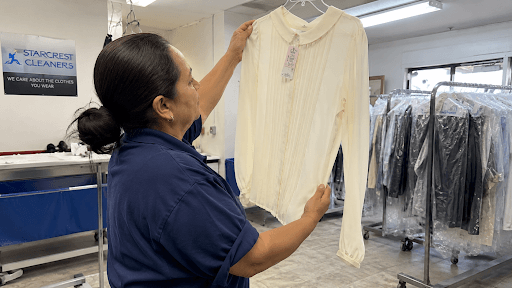
Worried about what’s happening to your favorite blazer or a delicate dress? Starcrest Cleaners’ professionally trained staff handles every garment with care and attention to detail — from delicate silks to structured suits. |
The Environmental Side of the Equation
If your interest in eco-friendly cleaning is genuinely about reducing your environmental footprint, here’s the good news: it makes a real difference.
PERC contaminates soil and groundwater when not disposed of properly, and it’s slow to break down in the environment. The EPA’s ongoing phase-out requirements reflect years of research into its environmental impact. Wet cleaning, by contrast, produces no hazardous waste — the water used goes through standard wastewater treatment. CO₂ cleaning is essentially zero-waste. Even hydrocarbon solvents have a considerably smaller environmental footprint than PERC.
Choosing a cleaner that uses modern, non-PERC methods isn’t just a feel-good choice — it’s a genuinely meaningful one, especially if you’re a regular dry cleaning customer.
How to Choose the Right Dry Cleaner
You don’t need to become a chemistry expert to make a smart choice. Here’s a simple three-step approach:
- Ask what method they use. A good cleaner will tell you exactly what solvents or processes they rely on — and won’t just say “eco-friendly.”
- Mention your fabric concerns. Tell them what the garment is made of, especially if it’s delicate, beaded, structured, or has a care label that says “dry clean only.”
- Look for experience. The method matters, but the skill of the person applying it matters just as much. A cleaner with a long track record and trained staff will get better results than a discount shop with fancy equipment.
If you’re in Illinois, Indiana, Missouri, or Nebraska, Starcrest Cleaners has locations across multiple communities — with drive-thru and delivery options that fit even the busiest schedule.
Professionally trained staff handle every garment with care and attention to detail. Whether it’s everyday attire or a delicate formal piece, the team ensures each item receives the treatment it deserves — so you don’t have to guess.
The Bottom Line
Eco-friendly dry cleaning is often better for your clothes, better for the environment, and — when done by professionals — delivers results just as good or better than traditional methods.
But the most important variable isn’t the solvent. It’s the cleaner. A trained professional with experience across fabric types, stain chemistry, and finishing techniques will always outperform a generic approach — eco-friendly or otherwise.
Your wardrobe is worth more than guesswork. Trust it to people who know what they’re doing.
Ready to give your wardrobe the care it deserves? Starcrest Cleaners combines expert garment knowledge with convenient service — same-day turnaround, drive-thru, and delivery options available. |